Dental Implants in Birmingham, AL
Permanent tooth replacement, done right.
Missing Teeth Change More Than You Think
A missing tooth isn't just a gap in your mouth. Over time, the surrounding teeth begin to shift. The jawbone beneath the empty space starts to resorb — shrinking and losing density because there's no root to stimulate it. Chewing becomes uneven. Speech can change. And for many people, the impact on confidence is significant and daily.
These aren't edge cases. They're predictable consequences of untreated tooth loss, and they compound the longer they're left unaddressed. Dental implants exist to interrupt that process — replacing not just the visible tooth, but the root structure underneath it. Among all available options for replacing a missing tooth, implants are the only restoration that addresses the full problem: what you can see and what you can't.

Why the Provider You Choose Matters
Implant placement is a surgical procedure that requires precision, experience, and thorough diagnostic imaging. Not every general dentist who offers implants has the same depth of training — and many practices refer implant placement out entirely, meaning you're handed off to a surgeon you've never met, then returned to your dentist for the final restoration. That handoff creates gaps: in communication, in continuity, and in the care you receive.
At Vulcan City Dental, implant placement is handled in-house by Dr. Michael MacWilliam, who completed an advanced residency at Foundry Dental with a specific focus on implant placement and hybrid dentures. This isn't a service the practice added to expand its menu. It's a clinical strength Dr. MacWilliam trained specifically to provide.
That distinction matters when you're making a decision of this magnitude. You'll work with the same doctor from consultation through final restoration — someone who already knows your full diagnostic picture, your health history, and what outcome you're working toward. The standard imaging we provide every new patient, including CBCT scanning, means Dr. MacWilliam has a precise, three-dimensional view of your bone density, anatomy, and available space before any part of the process begins.
The Consultation and Imaging Phase
Every implant case at Vulcan City Dental begins with a thorough diagnostic consultation. New patients receive a CBCT scan as part of their first visit — a three-dimensional imaging technology that gives Dr. MacWilliam a complete picture of the bone structure, nerve pathways, and anatomical details that a standard X-ray simply cannot show. This isn't an add-on; it's how we practice.
During your consultation, you'll see exactly what Dr. MacWilliam sees. The imaging and findings are reviewed on screen with you in real time. You'll understand the condition of the surrounding bone, what placement will involve, and what the full treatment timeline looks like before any decision is made. If there are factors that affect candidacy — bone volume, gum health, existing restorations — those are discussed openly, with honest options for addressing them. You leave the consultation with a clear picture and a plan, not a list of recommendations you're expected to accept on faith.
Implant Placement and the Healing Process
Once the treatment plan is confirmed and candidacy is established, the placement procedure itself is typically straightforward. A titanium post is surgically positioned into the jawbone at the site of the missing tooth, serving as the new root. The procedure is performed under local anesthesia; most patients are surprised by how manageable it is.
Following placement, a healing period of several months allows the implant to integrate with the surrounding bone — a process called osseointegration. This phase is critical to the long-term stability of the restoration, and it's not something that can be rushed. During this time, Dr. MacWilliam and our team monitor your healing and remain available to you. After every procedure involving injections, we follow up personally — same day or the next morning — to check in on how you're doing. When healing is complete and integration is confirmed, the final restoration is placed: a custom crown designed to match your surrounding teeth in function and appearance.

Are You a Candidate for Implants?
Most healthy adults who are missing one or more teeth are potential candidates for dental implants. The key variables are bone volume at the implant site, overall gum health, and general medical history. Certain systemic conditions — uncontrolled diabetes, autoimmune disorders, or active infection — can affect healing and need to be addressed before placement is appropriate. Tobacco use is a significant factor as well, as it impairs the osseointegration process.
If initial imaging shows that bone loss has occurred at the site — which is common when a tooth has been missing for some time — a bone graft may be necessary before placement. This is not a disqualifier; it's a preparatory step that rebuilds the foundation needed for a stable implant. Dr. MacWilliam will be direct with you about what your specific anatomy requires and what that means for your timeline and total investment.
If implants aren't the right option for you right now, we'll tell you that honestly — and we'll present you with the alternatives. The goal is the outcome that's actually best for your health, not the treatment that's easiest to sell.

Implants Compared to Bridges and Dentures
Bridges and dentures are legitimate options for replacing missing teeth, and there are situations where they're the right choice. But it's worth understanding what each option actually involves so you can make a decision that's genuinely informed.
A traditional bridge replaces a missing tooth by anchoring a crown to the two teeth on either side — which means those adjacent teeth must be ground down and permanently altered to support the restoration, even if they're otherwise healthy. The underlying bone continues to resorb without a root in place. A bridge can last many years with good care, but it addresses the visible gap without solving the structural problem beneath it.
Removable dentures replace multiple missing teeth and are generally the most accessible option by cost. They don't prevent bone loss, and many patients find that fit and function change over time as the underlying ridge remodels. Implant-supported dentures — a hybrid option Dr. MacWilliam has specific training in — offer the stability of fixed implants with the coverage of a denture, and are worth discussing if you're missing most or all of your teeth.
Implants, by contrast, replace both the root and the crown. They preserve bone, don't require altering adjacent teeth, and function like natural teeth. For most patients who are candidates, they're the most durable and functional long-term solution — though cost and timeline are real factors that deserve an honest conversation.
Recovery: What to Realistically Expect
The days immediately following implant placement typically involve some swelling, mild discomfort, and soft-food restrictions — all normal and manageable. Most patients return to regular activity within a day or two. Prescription or over-the-counter pain management is sufficient for the majority of cases, and Dr. MacWilliam will be specific with you about what to expect based on your individual procedure.
The longer healing phase — the months during which osseointegration occurs — is largely invisible. You're not in pain; you're simply waiting for the biological process to complete. A temporary restoration is typically placed during this period so there's no gap in your appearance or function. Follow-up appointments allow us to confirm that integration is progressing as expected before the final crown is placed.
If something doesn't feel right during your recovery, you can reach Dr. MacWilliam directly. Our patients text their actual doctor — not a front desk or an answering service. That access matters most during the times when you have a real question and need a real answer.
Long-Term Care and What Implants Require
One of the most straightforward things about dental implants is how you care for them: brush and floss as you would natural teeth. There are no special adhesives, no nightly removal, no soaking. The implant post itself cannot develop decay. The surrounding gum tissue and bone, however, still require consistent care — a condition called peri-implantitis, essentially gum disease around an implant, is the primary cause of implant failure and is entirely preventable with proper hygiene and regular professional maintenance.
With good home care and consistent checkups, dental implants are designed to last decades. Many last a lifetime. The crown portion may eventually require replacement due to normal wear, but the implant itself — properly placed and properly maintained — is one of the most durable restorations in dentistry.
At Vulcan City Dental, your implant isn't a transaction that ends when the crown is seated. It's part of your ongoing care picture, monitored at every visit by the same doctor who placed it. That continuity is part of what makes in-house implant placement the right model for our patients.

Cost, Timeline, and Financing
Dental implants represent a meaningful financial investment, and we won't pretend otherwise. A single implant — including the post, abutment, and crown — typically ranges from $3,000 to $5,000, depending on the complexity of the case and whether preparatory procedures like bone grafting are needed. Multi-tooth and full-arch cases are priced differently and will be reviewed in detail during your consultation.
Most dental insurance plans provide limited or no coverage for implants, though some plans contribute toward the crown portion. We'll help you understand exactly what your plan covers before any treatment begins.
For patients who need financing options, we work with third-party financing through CareCredit and Lending Club, which offer payment plans that make the total cost more manageable over time. We'll never present you with a treatment plan without being direct about what it costs and what your options are for covering it. If the timing isn't right or the budget isn't there, we'll talk through alternatives honestly — bridges, implant-supported dentures, or a phased approach that works with your situation.
The goal is to help you make the decision that's right for your health and your life — not to close a case.
Why Patients Choose Vulcan City Dental for Implants
There are several reasons patients trust us with implant care specifically — and they go beyond credentials, though the credentials matter. Dr. MacWilliam trained in implant placement and hybrid dentures during an advanced residency at Foundry Dental. That focus means implants aren't a service he learned in a weekend course or added to a general menu — they're a core part of his clinical foundation. Combined with the CBCT imaging available in-house from day one, he has both the diagnostic precision and the surgical experience to handle cases from straightforward single-tooth replacement to more complex full-arch work. Beyond the clinical side, the experience at Vulcan City Dental is different in a way that matters for a procedure of this scope. You'll work with the same doctor throughout the entire process. You'll see your own imaging and understand your own anatomy before anything is decided. You'll receive a written treatment plan with clear costs. And if you have a question at 9pm the night after your procedure, you can text Dr. MacWilliam directly and hear back from him — not a front desk message that gets answered Monday morning.
Schedule Your Implant Consultation
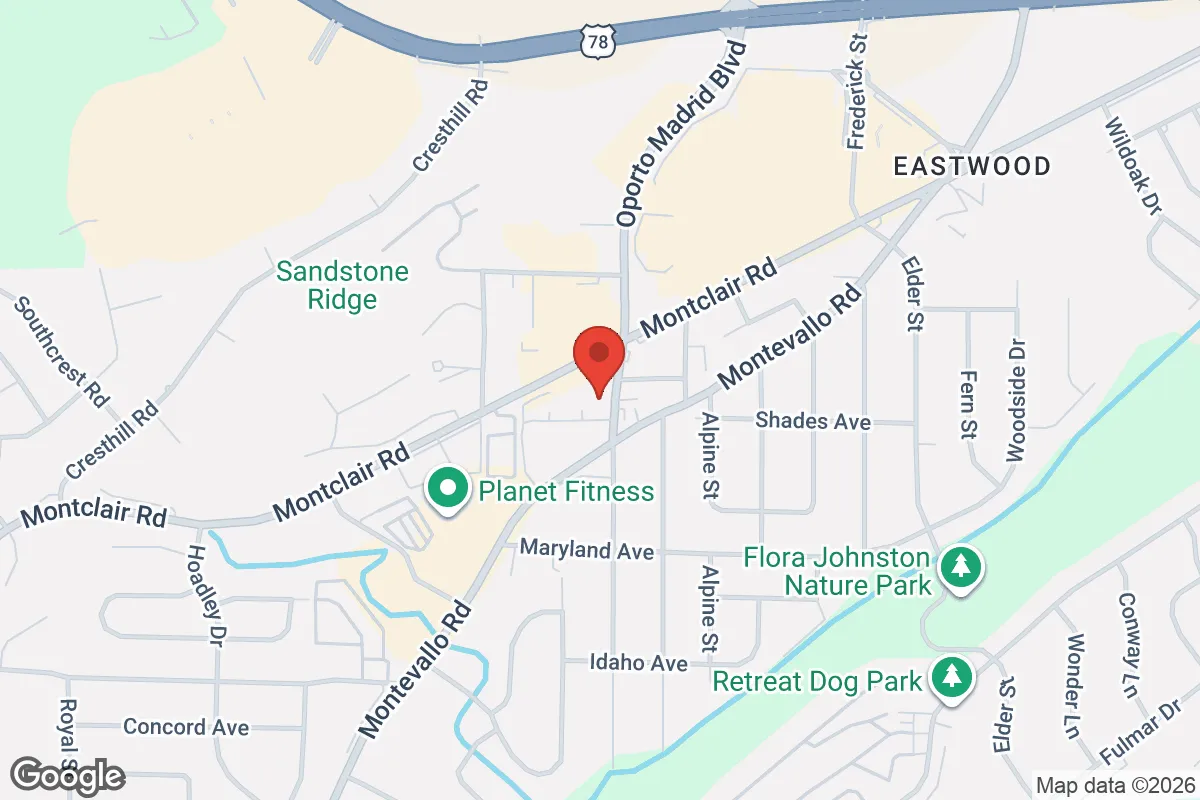
If you're missing a tooth — or multiple teeth — and you want a thorough, honest evaluation of your options, the right place to start is a consultation. At your first visit, you'll receive a CBCT scan and a full diagnostic review with Dr. MacWilliam. You'll see exactly what the imaging shows. You'll understand the condition of the bone at the site, what placement would involve, what alternatives exist, and what each option realistically costs. No pressure to commit. No recommendations made without explanation. Just a complete picture and an honest conversation about what makes sense for your specific situation. Vulcan City Dental is located at the intersection of Crestline, Mountain Brook, Irondale, and Crestwood — easily accessible from across the Birmingham Eastside. We're accepting new patients and have appointment availability for both consultations and full new patient exams. If you're ready to stop putting this off and want to work with a doctor who trained specifically to do this work, reach out. We'll start with the full picture — and go from there at your pace.


"Great outstanding service. Very friendly, professional, and patient staff!"